We are playing around with a new tool in Slack! Our friends at Prosus gave us access to PlusOne the generative AI teammate! So far I have managed
to get it to give me some key insights from the recent evaluation responses that we open-sourced last week.
Coffee Session
Mohamed Abusaid and Mara Pometti MLOps Podcast
Takers, shapers and makers.
A great name for a band, but an even better framework for thinking about how companies interact with AI.
This was one of the many cool takeaways from this week’s podcast with Mohamed Abusaid and Mara Pometti from Quantum Black.
Without giving too much away, (saving the good stuff for the podcast):
Takers subscribe to a service and simply plug in their UI, they don't need their own data
Shapers build on the shoulders of existing services, but add extra knowledge or pre-processing, creating a more sophisticated use case
Makers want to build something from scratch
Luke Skywalker’s father is actually Da… oh, wait sorry, I said I wouldn’t give too much away.
My co-host Stephen Batifol and I also dig into:
bridging technology and business needs
the importance of educating people about AI and what’s happening behind the scenes
the importance of aligning technology outcomes with user and business expectations
treating LLM projects and products as software and the good practice that comes with that
So much to get in to in this episode, be sure to click below and listen.
Senior Machine Learning Engineer // Health Rhythms (fully remote and flexible) Health Rhythms are
looking for a senior MLE to help bridge data science with production as they work to reduce the global burden of mental health through better measurement.
What You'll Do:
Standardize data science transformation and streamline processes with efficient tools
Apply Python and ML expertise to bring ML models to life.
Lead and guide a talented team for top-notch results and create helpful resources for data scientists.
GPUs in MLOps together with Flyte
Graphics Processing Units (GPUs) may have started in the world of gaming, but they've become essential powerhouses in the realm of machine learning. GPUs play a pivotal role in machine learning by efficiently distributing the workload required for training data.
Without their immense processing power, the advancements in ML today wouldn't be possible. However, effectively utilizing GPUs for ML demands a strategic approach and awareness of potential pitfalls. Check out our article on GPUs in MLOps where we delve into coding techniques for optimizing GPU performance and address common challenges that arise when using GPUs at scale. We’ll cover the following:
The difference between GPUs and CPUs
Importance of GPUs in ML
Strategies for GPU resource allocation and management
Union.ai enables you to easily manage, automate, and scale data AI workflows with a user-friendly interface. Flyte is an open-source orchestrator designed to ensure scalability and reproducibility utilizing Kubernetes.
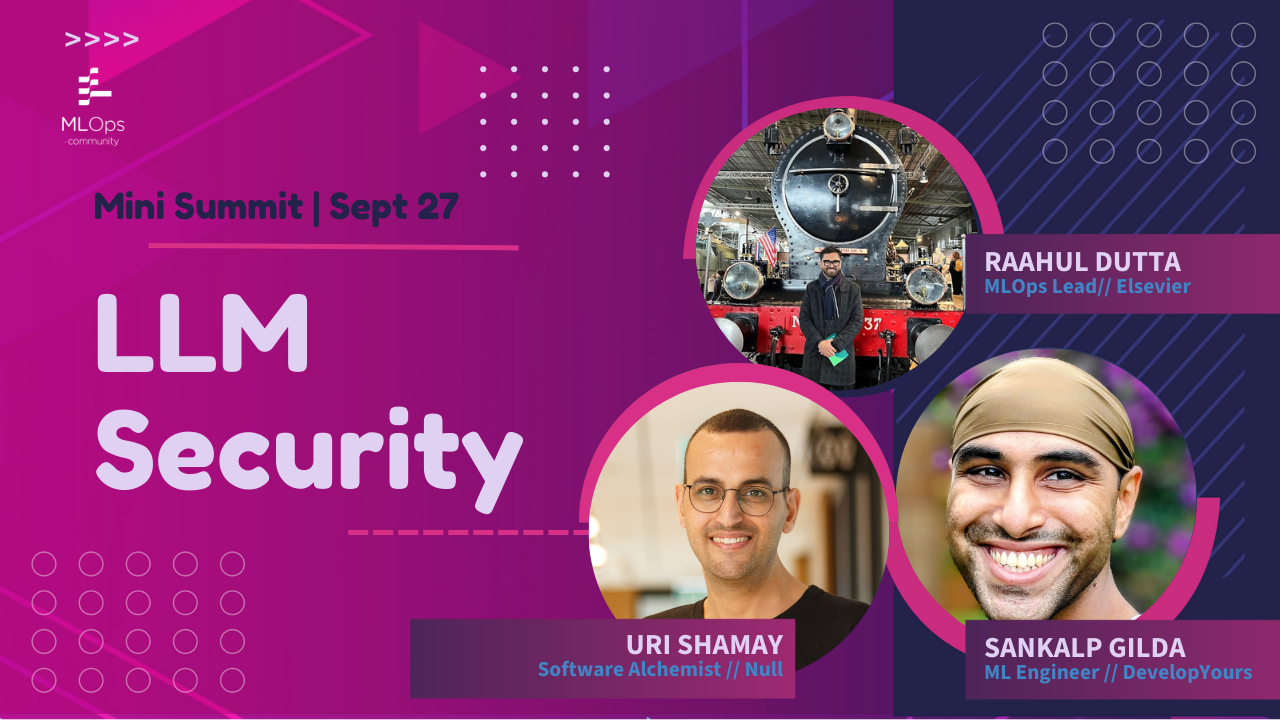
MLOps Community Mini Summit #1
Join Ben Epstein as he hosts 3 presentations on LLM Security. Raahul will cover the risks of prompt injection, denial of service, and model theft, along with concerns about insecure plugins and overreliance on LLMs. Uri will introduce GeniA, a new OSS for platform engineering with
Gen AI, and Sankalp will introduce tsbootstrap, an open-source Python library for time series analysis.
I love it when initiatives are spurred directly from the community! Today's event is exactly that. The community got together around something that lots of us have been thinking about.
I had to share this awesome opportunity to work with the NBA.
They’re reaching out to find companies to help improve the game and fan experience using tech. It’s a huge chance to develop a product with them, with access to the League and team experts. Getting a product into production with would be a huge slam-dunk for brand awareness!
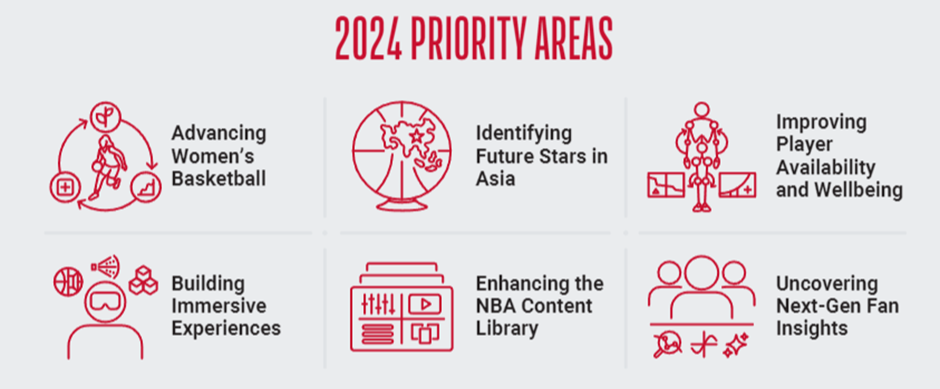
They’re especially interested in anything that aligns with one of their priority areas for this year.
It’ll need to be a fast break though, applications close October 4th — get more info and apply here.
🔹Paper-cuts: Subjecting a group of users to constant change. These ongoing
experiments might cause a non-reliable experience, making users constantly thrashed by paper-cuts manifesting as ever-changing features and general product unpredictability.
🔹Snacking: One of the paradoxical downsides of a culture of experimentation is that it can sometimes encourage an overly cautious approach to innovation, known as “snacking.” This approach only brings small wins, and it discourages people from taking higher risks for significantly greater rewards.
🔹Replacing dashboards with experiments: When running an experiment, it’s common to define narrowly focused metrics that measure the specific impact of an initiative. These metrics are useful for understanding how well the experiment is performing in relation to its predefined objectives. However, it is crucial to understand how this
cumulative experiment wins impact the overall company metric.
🔹Dead Code: Running too many experimentations comes with the cost of dead code. The time and resources needed to clean up this code can be significant and will later affect your experimentation speed.
The article also gives different approaches on how to avoid these bad practices.
Thanks for reading. This issue was written by Demetrios and edited by Jessica Rudd. See you in Slack, Youtube, and podcast land. Oh yeah, and we are also on Twitter if you like chirping birds.